Coil springs support the vehicle’s weight, maintain ride height, and allow the suspension to move over bumps. They carry a constant load even while the vehicle is parked, then absorb additional force during braking, turning, cargo hauling, and travel over uneven roads.
A spring can weaken, crack, or break after years of corrosion and repeated compression. Some failures are obvious because one corner sits low, while others remain hidden near the spring seat until a technician raises the vehicle and checks the complete coil.
How Coil Springs Handle Vehicle Weight
A coil spring is made from high-strength steel formed into a spiral. When the wheel moves upward, the spring compresses and stores energy. As the wheel moves back down, the spring expands. Shocks or struts control that movement so the body does not continue bouncing.
Springs are designed for a specific vehicle weight and suspension geometry. Front springs may support the engine and transmission, while rear springs carry passengers, cargo, and towing-related loads. Their height and spring rate help establish alignment angles, ground clearance, and suspension travel.
A cracked spring may still support part of the vehicle’s weight, especially when only the final coil has broken. That does not make it safe to ignore. The remaining section carries additional stress and may shift out of its seat.
Corrosion Is A Leading Cause Of Spring Failure
Road salt, moisture, dirt, and chipped protective coating expose spring steel to corrosion. Rust gradually removes material from the surface and creates weak points where cracks can begin. The lower coil is especially vulnerable because water and debris collect around the spring seat.
Once corrosion penetrates deeply, repeated suspension movement can cause the weakened section to fracture. A spring may break during a pothole impact, but the underlying damage often developed over several seasons.
Surface rust does not always require spring replacement. Heavy scaling, deep pitting, reduced coil thickness, or separation near the end of the spring indicates a structural concern. An inspection should include the areas hidden against rubber pads and metal seats.
Potholes And Repeated Suspension Impacts
A hard pothole strike can compress the spring rapidly and place extreme force through one section of the coil. Curbs, road debris, railroad crossings, and rough construction zones can create similar impact loads.
One severe hit may break a spring that was already weakened by corrosion or fatigue. Repeated smaller impacts can also contribute over time, especially when shocks or struts no longer control suspension movement effectively.
Impact damage may affect more than the spring. The tire, wheel, strut, control arm, ball joint, wheel bearing, and alignment should be checked when the vehicle develops a new noise, steering pull, vibration, or change in ride height after hitting a road hazard.
Metal Fatigue From Years Of Use
Every compression and extension cycle places stress on the spring steel. The spring is designed to withstand millions of these cycles, but age, mileage, heat, corrosion, and heavy use can eventually create metal fatigue.
Fatigue cracks often begin at a small surface defect and grow with repeated movement. The spring may fracture without a major impact at the moment of failure. Drivers sometimes discover the problem after hearing a metallic snap while turning, backing out, or traveling over a minor bump.
Vehicle age can be as important as mileage. A low-mileage vehicle that has spent many winters in corrosive conditions may develop spring trouble earlier than a higher-mileage vehicle used in a dry climate.
Overloading And Incorrect Suspension Parts
Carrying more weight than the vehicle is designed to handle increases spring compression and operating stress. Frequent overloading can cause sagging, reduced suspension travel, tire contact, and accelerated spring fatigue.
The same concern applies to trucks and SUVs used for towing. Tongue weight, tools, equipment, and passengers all count toward payload. Helper springs or suspension upgrades must be selected correctly because an improper setup can alter handling without increasing the ratings of the tires, brakes, axles, or frame.
Incorrect replacement springs can also create trouble. A spring with the wrong rate, height, diameter, or end shape may not sit securely or control the vehicle properly. Springs should match the exact drivetrain, body style, suspension package, and axle load.
Signs A Coil Spring May Be Broken
A broken spring can change vehicle height and create noise, but symptoms depend on which section fails. A short broken piece near the bottom may remain trapped in the spring seat and produce only an occasional rattle.
- Warning signs include:
- One corner sitting lower
- Metallic clunking over bumps
- A scraping or rattling sound
- Uneven tire wear
- Steering pull
- Reduced ground clearance
- A spring piece beneath the vehicle
- A coil rubbing the tire
- The suspension bottoming out easily
A broken end can puncture a tire if it shifts toward the sidewall. The vehicle should not be driven when the spring contacts the tire, has moved out of position, or no longer supports the body correctly.
Why Related Suspension Parts Need To Be Checked
A failed spring changes the load placed on shocks, struts, mounts, bushings, tires, and alignment angles. The vehicle may lean during turns, brake unevenly, or place additional weight on the opposite side.
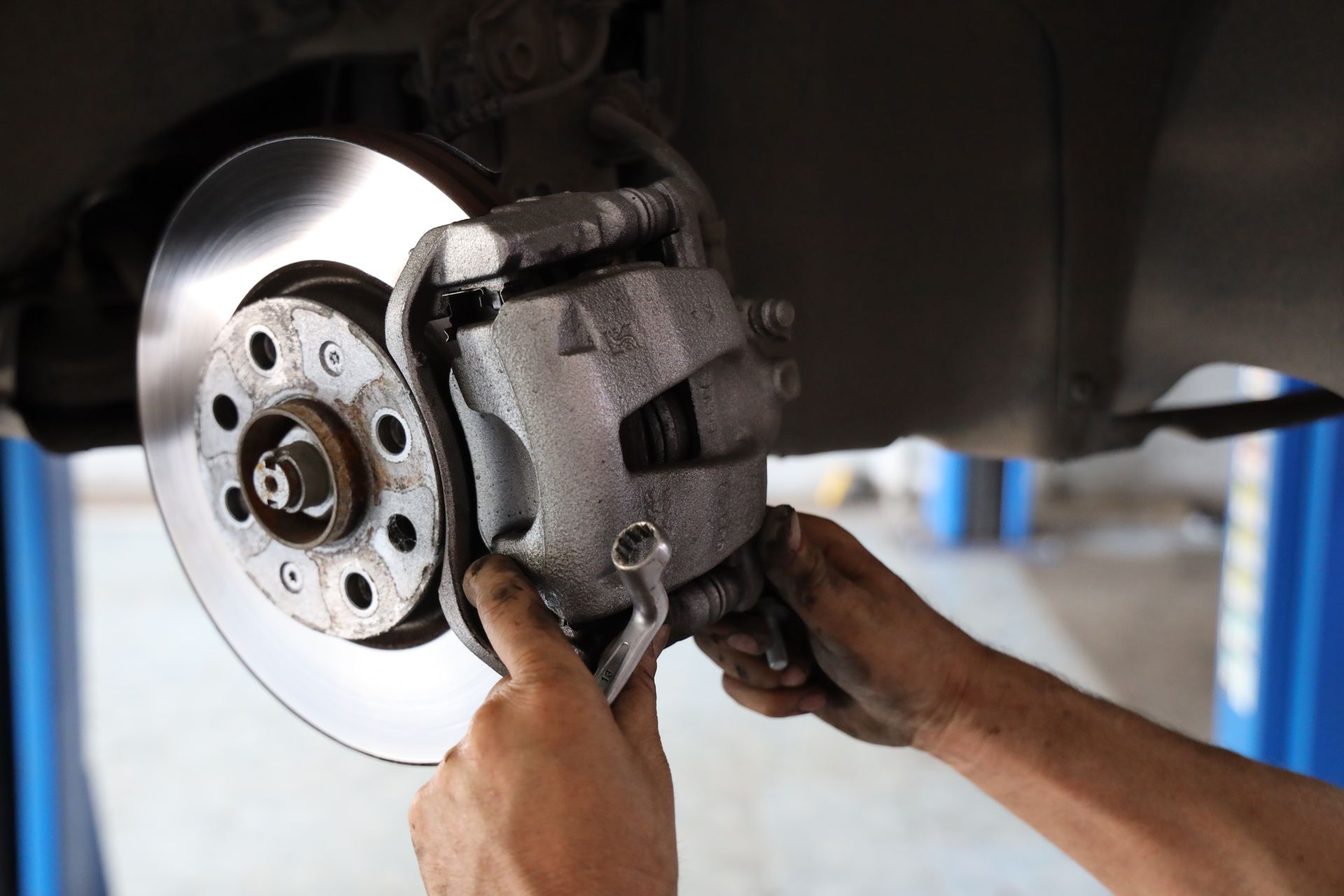
Technicians check the spring seats, rubber isolators, strut assemblies, dampers, control arms, and nearby brake hoses for secondary damage. Wheel alignment should be evaluated after the spring and any loose suspension components are repaired.
Coil springs are commonly replaced in axle pairs because the spring on the opposite side has experienced the same age, road conditions, and load cycles. Replacing only one can leave the vehicle with unequal ride height or spring response. Regular maintenance provides opportunities to identify corrosion and damaged spring ends before complete failure.
Get Coil Spring And Suspension Repair In Williamston, MI, With Key Diesel and Auto Service
Key Diesel and Auto Service in Williamston, MI, can check coil springs, shocks, struts, mounts, control arms, tires, and alignment-related wear.